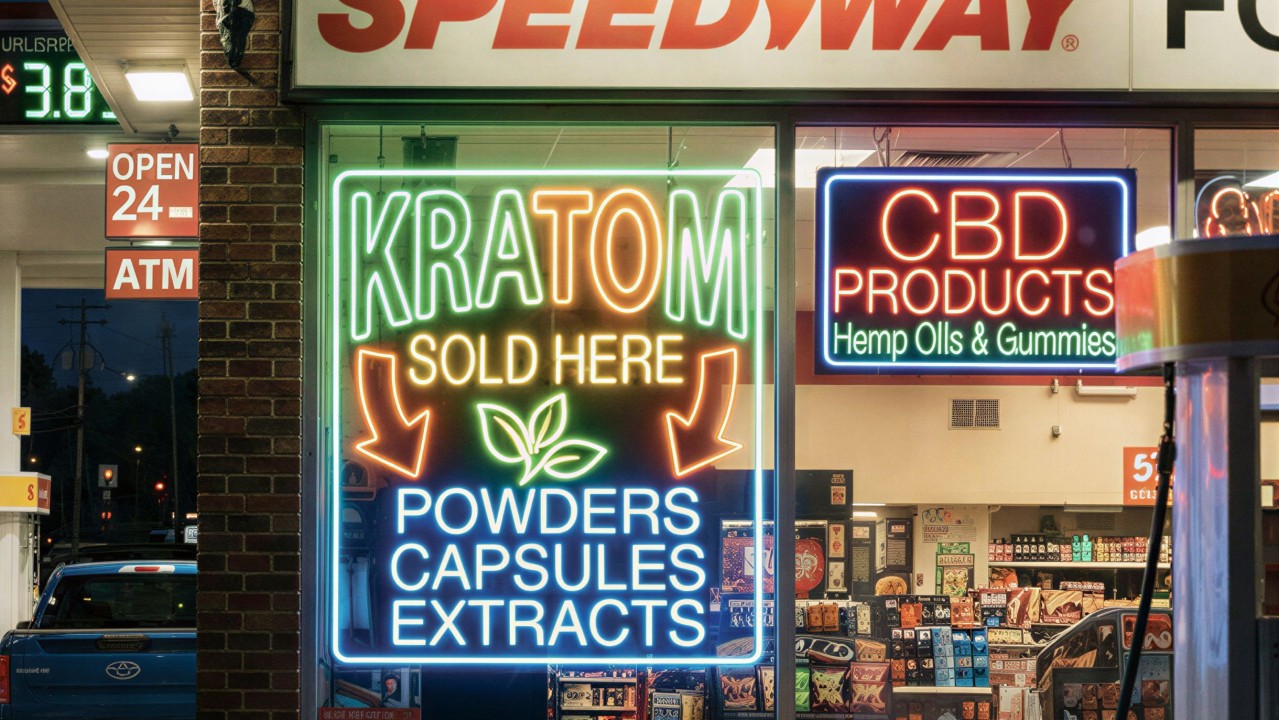
We all have questions on our health history and systems review about tobacco, alcohol, and marijuana use. They often get lumped together as “recreational” drugs. I can say for myself that when I ask a patient about their intake of supplements, I’m expecting a daily vitamin like D3 or B12 or fish oil or maybe one of the Three G’s - garlic, ginseng, ginkgo biloba - as they can increase bleeding.
A patient can state “No” to any recreational drug use. No tobacco. No alcohol. No marijuana use. When fully investigated and properly interviewed, however, you may discover that your patient is (and has been) taking an “herbal product” or “supplement” that they get from the gas station every time they fill up. What I’m referring to is the leaves of a tropical evergreen native to Southeast Asia called kratom. For those of us clinicians that perform sedation and/or anesthesia, it’s important that we know about kratom and share our findings.
For those of us clinicians that perform sedation and/or anesthesia, it’s important that we know about kratom and share our findings.
If you have extensive knowledge about kratom, I would love to learn more from you. If you’ve never heard of kratom, I’m here to provide a starting point so please read on.
Personally, my vice at a gas station is Trident spearmint gum so I had no knowledge until recently about kratom. Amazingly, it is sold over the counter. Most states now require the purchaser to be of tobacco purchasing age and the majority of what is purchased in gas stations comes in the form of clear capsules, inside of which looks like a brownish mustard powder. This truly presents kratom as being just another supplement not much different than any other vitamin.
Here, in fact, is what it really is:
Kratom is derived from Mitragyna speciosa, a tropical tree native to Southeast Asia. Traditionally, its leaves have been chewed or brewed into tea for stimulant and analgesic effects. In the United States, of course just having the leaves and chewing it is too much work. So, we had to cut it down, purify it, and pop it as a pill or other form. It is available as powders, capsules, tablets, teas, and concentrated extracts and is commonly obtained online, in gas stations, or through smoke/vape shops.
The problem for anesthesia/sedation providers is not simply that kratom is psychoactive. Kratom pharmacologically overlaps with several systems we manipulate during anesthesia, while its commercial products are also poorly standardized.
Kratom pharmacologically overlaps with several systems we manipulate during anesthesia, while its commercial products are also poorly standardized.
Kratom is NOT simply an “Herbal Opioid”.
Kratom contains more than 50 identified alkaloids, although the headlines are focused on two specifically: mitragynine and 7-hydroxymitragynine (7-OH). Both interact with μ-opioid receptors. Mitragynine also affects serotonergic, adrenergic, and other neurotransmitter systems. [1]
This helps explain kratom’s unusual dose-dependent effects. Lower botanical exposures are commonly associated with stimulation and increased energy and alertness, while larger exposures can produce analgesian, relaxation, and opioid-like sedation. [2,3] Adverse effects reported with kratom include nasusea, vomiting, constipation, tachycardia, agitation, seizures, liver toxicity, dependence withdrawal and, in severe cases, respiratory depression. [1,4]
There is no FDA-approved therapeutic dose of kratom. Published literature commonly describes approximately 1-5 grams of botanical material as producing predominantly stimulant effects and approximately 5-15 grams as producing more opioid-like effects, but these ranges should not be interpreted as established safe doses.[2] Product composition, alkaloid concentration, frequency of administration, and individual tolerance vary considerably.
More importantly, those gram-based descriptions become nearly meaningless when the patient is using concentrated extracts.
Enter 7-OH: An Important New Distinction
As if dealing with OTC “supplements” with little to no oversight or regulation wasn’t enough, we as anesthesia and sedation providers should now distinguish traditional botanical kratom from products containing concentrated 7-hydroxymitragynine, or 7-OH.
7-OH occurs naturally only as a minor constituent of kratom leaf, yet it possesses substantially greater μ-opioid receptor activity than mitragynine.[1] Commercial products containing concentrated or enhanced 7-OH are now sold as tablets, gummies, drink mixes, shots, powders, and other formulations. The FDA describes these as potent opioid products and has specifically warned healthcare professionals about their risks.[5]
This means that asking a patient, “how many grams of kratom do you take?” is no longer enough. Five grams of botanical leaf powder as a concentrated kratom extract and a tablet containing enhanced 7-OH are not pharmacologically equivalent exposures.
“This means that asking a patient, ‘How many grams of kratom do you take?’ is no longer enough.”
Obviously, for sedation and anesthesia providers, a thorough history and understanding should establish the exact product, formulation, amount per dose, frequency, duration of use, and time of the last dose.
I can hear some of you saying, “But Travis, why should I care? I’m just going to titrate to effect so it doesn’t matter.”
There are three main peri-anesthetic concerns.
- First, opioid tolerance and altered analgesia. Chronic kratom use can produce tolerance, physical dependence, and withdrawal. [6] Because its major alkaloids act at opioid receptors, habitual exposure may also alter a patient’s response to conventional use of opioids in sedation/anesthesia.
- Second, kratom can alter drug metabolism. This is particularly relevant to clinicians administering midazolam. A controlled human pharmacokinetic study examined subjects receiving a low dose of kratom tea with oral midazolam, a CYP3A probe. Kratom increased midazolam peak concentration by approximately 50% and overall exposure by approximately 39%.[7] Now, the study used oral midazolam and a relatively small kratom exposure, so these findings should not be directly converted into an IV midazolam dose adjustment. Nonetheless, the results demonstrate something clinically important. Kratom is capable of producing a measurable drug-drug interaction involving an enzyme responsible for metabolism of numerous medications. This only increases the need for careful and considerate drug titration and full monitoring.
- Third, acute effects and chronic effects may point in opposite directions. A patient with recent kratom or concentrated 7-OH exposure may have additive sedation when opioids, benzodiazepines, or other CNS depressants are administered. Conversely, a heavy chronic user may present with tolerance, difficult analgesia or withdrawal.
Dependence is another reason why simply instructing every patient to abruptly discontinue kratom before a procedure may be inappropriate. Kratom withdrawal can resemble opioid withdrawal and may include anxiety, irritability, restlessness, insomnia, sweating, tremor, gastrointestinal symptoms, muscle aches, and autonomic activation.[6] In the perioperative setting, agitation, tachycardia, hypertension, and increased pain could potentially be mistaken for inadequate anesthesia, emergence delirium or another medical problem.
So what should we ask?
We can’t rely on patients to disclose kratom as a medication on the medication list as they often consider kratom to be a supplement. Currently, the best thing is to specifically ask, “Do you use kratom or 7-OH/mitragynine products, herbal energy products, or opioid alternatives?” If the response is yes, identify the product and formulation; amount per administration; number of daily dose; duration of use; last administration; and whether missing a dose causes withdrawal symptoms. Concurrent opioids, benzodiazepines, alcohol, cannabis, gabapentinoids and serotonergic medications deserve particular attention.
Finally, we as clinicians should recognize that regulation is evolving. The FDA has not approved kratom or 7-OH for medical use and has specifically warned about concentrated 7-OH products. [1,5] In July 2026, the DEA announced its intent to temporarily place 7-OH above specified thresholds and several related substances into Schedule I while specifically distinguishing these products from botanical kratom containing naturally occurring trace concentrations.[8] State restrictions vary and continue to change.
Kratom is not a reason to panic when it appears on a health history. It is a reason to ask better questions and as mentioned above, more of them. For those of us performing only sedation, it may be worthwhile to consult with patients consuming kratom that sedation may not be effective for them and eliminate them as a candidate for sedation. For those providers performing general anesthesia, it likely will require a modified general anesthetic plan.
I hope this may have shed a bit of light on kratom for you and your colleagues. As always, I appreciate you sharing your experiences and thoughts with me so we can all collectively gain knowledge and learn together.
Be safe out there!
Travis V. Coulter DDS
Clinical Director, Xchart.com
References
1] U.S. Food and Drug Administration. FDA and Kratom. U.S. Food & Drug Administration. Accessed September 7, 2026.
2] Lund E, Low AB, Allan JD, Puentes JA, Flynn DN. Anesthetic Challenges Posed by Heavy Kratom Users. Cureus. 2022;14(3). doi:10.7759/cureus.22864.
3] Vermaire DJ, Skaer D, Tippets W. Kratom and General Anesthesia: A Case Report and Review of the Literature. A&A Practice. 2019;12(4):103-105. doi:10.1213/XAA.0000000000000857.
4] Post S, Spiller HA, Chounthirath T, Smith GA. Kratom Exposures Reported to United States Poison Control Centers: 2011–2017. Clinical Toxicology. 2019;57(10):847-854. doi:10.1080/15563650.2019.1569236.
5] U.S. Food and Drug Administration. Products Containing 7-OH Can Cause Serious Harm. U.S. Food & Drug Administration. Accessed September 7, 2026.
6] Stanciu CN, Gnanasegaram SA, Ahmed S, Penders T. Kratom Withdrawal: A Systematic Review with Case Series. Journal of Psychoactive Drugs. 2019;51(1):12-18. doi:10.1080/02791072.2018.1562133.
7] Tanna RS, Nguyen JT, Hadi DL, et al. Clinical Assessment of the Drug Interaction Potential of the Psychotropic Natural Product Kratom. Clinical Pharmacology & Therapeutics. 2023;113(6):1315-1325. doi:10.1002/cpt.2891.
8] U.S. Drug Enforcement Administration. DEA to Temporarily Schedule 7-OH and Related Substances to Protect Public Safety. July 1, 2026.