A letter from the Xchart team
Why should I use Xchart?
It’s a fair question. Changing the way your team charts takes time, attention, and money. You deserve a practical answer about what you get in return.
If you’re looking at Xchart for your practice, you may already have a charting process that gets the job done. So why change it?
Our answer starts with the work around the record. Xchart is a digital charting platform for sedation and anesthesia. It helps your team capture vital signs, document medications, and create clear, organized records. But its value goes beyond replacing a sheet of paper. It can reduce the repetitive work of creating, reviewing, and storing each one.
The paperwork doesn’t end when the procedure does.
With paper charting, someone records vital signs, documents medications, collects monitor printouts, obtains signatures, and scans the finished record into the correct patient chart. Those tasks take staff time, even after the doctor leaves the room.
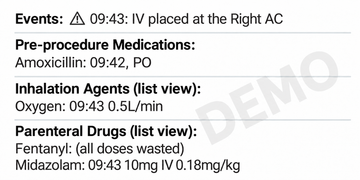
With a compatible monitor connection, Xchart automatically captures vital signs. Your team still documents medications and events and reviews the record, but spends less time copying numbers and handling paper.
A record should be easy to read and review.
Copying information from monitor printouts to a handwritten chart creates opportunities for missed entries, transcription errors, and hard-to-read notes. Xchart brings that information together in a readable digital record.
Providers can review entries and correct inaccurate readings, such as those caused by a displaced sensor, before finalizing the record. Clear documentation also makes it easier to look back at a case and understand what happened during treatment.
What is your current process costing you?
A subscription is a visible expense. The time spent completing and processing paper records can be easier to overlook.
For example, 30 minutes of charting work by an employee earning $25 per hour represents $12.50 in staff time per case. Across multiple cases, that time adds up. This is an illustration of staff cost, not an estimate of the time Xchart will save.
When you compare plans and pricing, look at your practice’s full charting workflow. The value depends on your case volume and processes. Time saved can free your team for work that still needs to be done.
You don’t have to figure it out alone.
We offer training at no additional cost. Your providers remain responsible for reviewing and finalizing their records, and if the automatic vital-sign connection is interrupted, your team can continue entering information manually.
The goal is straightforward: make sedation and anesthesia documentation easier, reduce repetitive work, and help your team produce clear records while staying focused on patient care.
If that sounds useful, we’d love to hear how your team charts today and show you how Xchart could fit into your day. Bring your questions, including the reasons you’re unsure about making a change.
The Xchart team
Let’s talk about your practice.